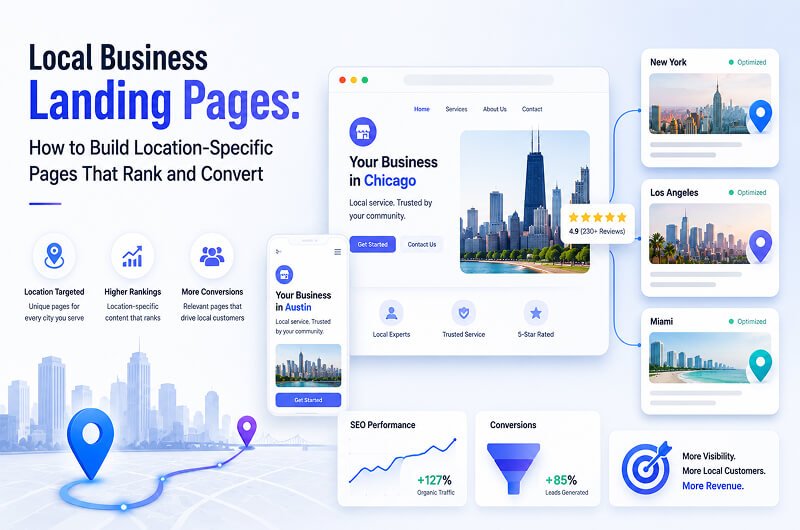
Location pages are the unsung heroes of local SEO. Learn how to build high-quality, location-specific landing pages that rank for city and neighborhood searches while converting visitors into paying customers.
For businesses that serve multiple locations or have a strong geographic service area, location-specific landing pages are among the most powerful and underutilized tools in local SEO. A well-constructed location page one that provides genuine, locally relevant value rather than thin, templated content can rank for city and neighborhood searches that your homepage simply cannot capture.
The most common mistake in local landing page creation is producing duplicate or near-duplicate content across multiple pages with only the location name changed. Search engines see through this immediately, and it can actually harm your overall site authority. Every location page must contain meaningfully unique, locally specific content.
High-quality location pages incorporate several key elements. The first is locally specific content that goes beyond inserting a city name reference neighborhood characteristics, local customer examples or case studies (with permission), local service area descriptions, and any location-specific certifications, partnerships, or community involvement. This genuine local specificity is what earns both search ranking and customer trust.
Embedded Google Maps on each location page confirm geographic relevance to both search engines and visitors. Local customer testimonials specific to each service area add authentic social proof. Location-specific FAQs address the particular questions customers in that market ask most frequently.
From a technical standpoint, location pages should have unique title tags and meta descriptions that include the location name and primary service keyword. Internal linking between your homepage, service pages, and location pages distributes authority efficiently. Add LocalBusiness schema to each location page with location-specific address, phone, and hours data.
For service-area businesses without physical storefronts in each location, neighborhood service pages work similarly but focus on service availability, travel radius, and local customer stories rather than physical address details. Even without a local address, well-crafted service area pages can rank for neighborhood-level queries when backed by strong domain authority and relevant local content.
Frequently Asked Questions
Q: How many location pages should I create for my business?
A: Create a location page for every distinct area where you have genuine business activity where you’ve served customers, where you have Google Business Profile listings, or where you’re actively marketing. Prioritize quality over quantity; three excellent location pages outperform fifteen thin ones.
Q: Can I have location pages for cities where I don’t have a physical office?
A: Yes, as long as you genuinely serve those areas and your content honestly represents your service availability. Service-area business location pages should be transparent about not having a physical location while still providing locally relevant, detailed service information.
Q: How long should a location page be?
A: Aim for at least 500 to 700 words of locally unique content per page. Include your primary service descriptions, local context, customer testimonials, FAQs, and contact information. Pages that provide genuine value to visitors not just keyword-stuffed text tend to rank better and convert at higher rates.