Schema markup translates your business content into language that search engines and AI tools understand instantly. Learn which schema types matter most for local businesses and how to implement them without technical expertise.
The difference between a local business website that consistently earns featured snippets, AI Overview placements, and rich local search results and one that gets passed over for all three often comes down to a single technical implementation: structured data, also known as schema markup.
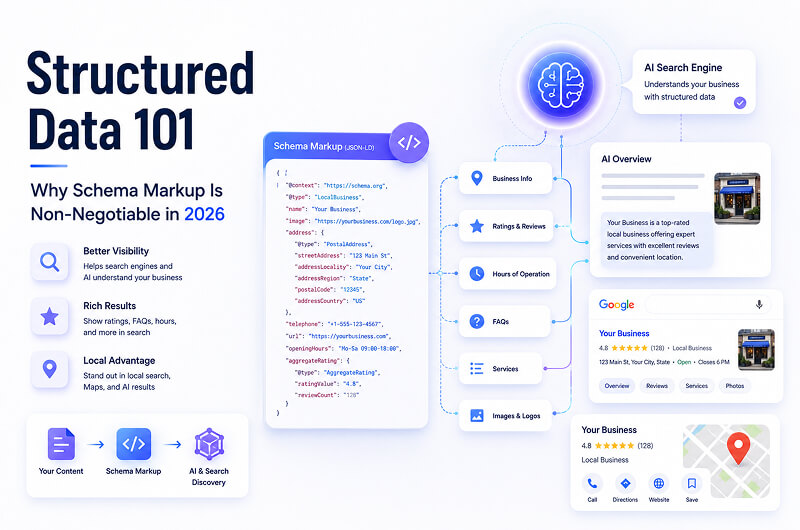
Schema markup is a vocabulary of HTML tags that you add to your website to explicitly communicate the meaning of your content to search engines. Without schema, a search engine’s crawler reads your page and makes educated guesses about what the content means. With schema, you eliminate the guesswork you tell it directly: “This is a local business. These are its hours. This is its phone number. These are its services. Here are customer FAQs.”
For local businesses in 2026, four schema types are most valuable. First is LocalBusiness schema (and its specific subtypes: Restaurant, MedicalBusiness, HomeAndConstructionBusiness, etc.), which provides the basic framework for identifying your business to search engines. Second is FAQPage schema, which labels your FAQ content so that search engines can extract it for featured snippets and AI answers. Third is Review schema, which surfaces star ratings in search results. Fourth is OpeningHoursSpecification, which ensures your hours are read accurately in voice search responses and local pack results.
Implementing schema doesn’t require coding expertise. Google’s Structured Data Markup Helper guides you through a visual tagging process, and many popular CMS plugins generate LocalBusiness schema automatically. For WordPress users, the Schema Pro plugin or the free RankMath plugin offer comprehensive schema generation with minimal configuration.
After implementing schema, validate it with Google’s Rich Results Test and monitor your Search Console for any structured data errors. Fix errors promptly invalid schema can suppress rich result eligibility until the issues are resolved.
The payoff from schema investment is significant and durable. Businesses with properly implemented schema consistently earn richer search result presentations, higher click-through rates, and stronger representation in AI-generated answers compared to competitors without it.
<strong>Frequently Asked Questions</strong>
<strong>Q: Is schema markup the same as metadata?</strong>
<strong>A:</strong> No. Metadata (like title tags and meta descriptions) provides basic page information to search engines and is visible in search results. Schema markup provides structured, semantic meaning about page content it tells search engines what content is (a business, a review, an FAQ) rather than just labeling pages.
<strong>Q: Does implementing schema guarantee rich results in Google Search?</strong>
<strong>A:</strong> Schema makes your content eligible for rich results, but does not guarantee them. Google selects which pages receive rich results based on content quality, relevance, and technical validity. High-quality content with valid schema is the best path to earning rich result placement.
<strong>Q: How often should I update my schema markup?</strong>
<strong>A:</strong> Update your schema whenever underlying business information changes hours, location, services, or phone number. FAQPage schema should be updated whenever you add new questions or refine existing answers.